Ripping the Guardrails off Literary Genre Fiction

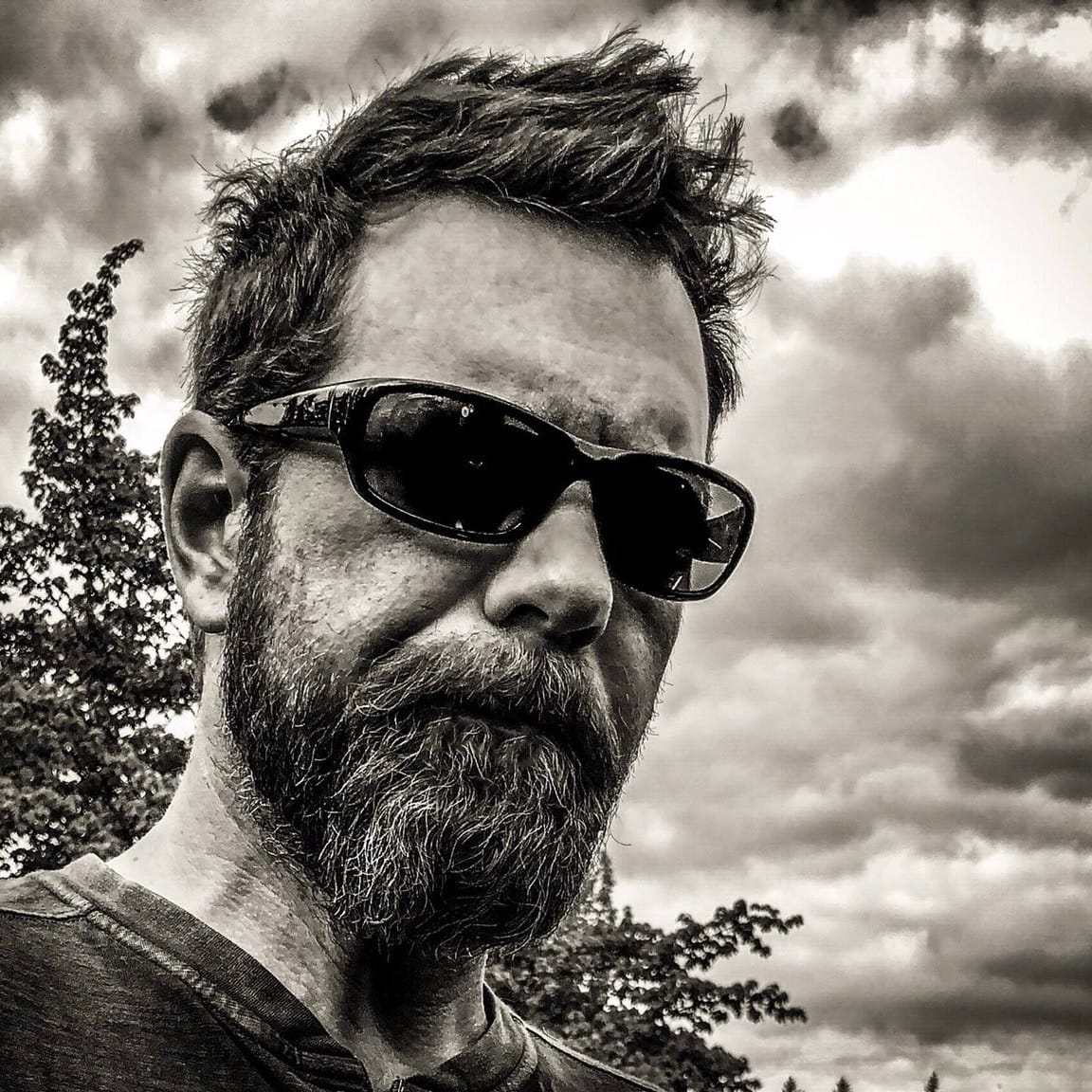
I’m a military veteran who writes dark, pulse-pounding literary genre fiction with the guardrails ripped off. Stories that make you think, not tell you how to think.
If that sounds like empty marketing copy, let me show you what it really means. And more importantly, why it works.
When the Guardrails Come Off
Means and ends are a dark path, and once you go down it, you become lost in the very evils you’ve rationalized.
Sarai, Godsbane
It doesn’t mean grimdark for shock value. It doesn’t mean nihilistic misery porn where nothing matters and everyone’s terrible. It means real consequences. Characters who fail people they love. Moral complexity that doesn’t resolve into easy answers.
Jasmine in The Stygian Blades is a princess from Rathapura who was kidnapped as a child, sold to slavers, and trafficked into sexual exploitation. A nobleman bought exclusive access to rape her until one of his friends gave her a terrible facial scar—after which a brothel madam bought her “for pennies on the pound.” She now works at the Velvet Sheath, marketed as an “exotic” concubine with “wanton Sunward charms.”
But Jasmine isn’t broken. She’s sarcastic, spirited, and resilient. She jokes that “the whole city has suddenly developed a terminal case of Zindarian madness” when everyone wants exotic entertainment. She’s friends with the other women at the brothel, drinks too much beer, teases newcomers. She’s traumatized but surviving with her personality intact. Not a prop. Not inspiration porn. A person.
In Death or Glory, First-to-Dance is repeatedly sexually assaulted and tortured for days while the protagonist is forced to watch, helpless. Born in Battle explores the aftermath—not as backstory, but as ongoing trauma that shapes both characters. His withdrawal. Suicidal ideation. Issues with intimacy. Rage that comes from nowhere. Dissociation so severe he becomes numb to magic that once filled him with love. The book doesn’t offer redemption arcs or healing journeys. It shows two people trying to function while carrying damage that doesn’t go away. That’s what “guardrails off” means—not spectacle, but unflinching honesty about consequences.
In Immortal and Godsbane, consciousness transfer—moving your mind into someone else’s body—is fraught with ethical debate. When Lenaja is dying, her friend transfers her consciousness into an enemy soldier’s body to save her life. He tells her the woman was already dead. The AI in her new body immediately corrects the lie: Chamid was fully conscious during the transfer and experienced her mind being invaded, erased, replaced—while she was aware it was happening. Now Lenaja lives in Chamid’s body, haunted by fragments of the woman whose mind was raped. The book asks whether saving Lenaja’s life justified the horrific means. It doesn’t answer. It just forces you to sit with the question while Lenaja wakes screaming from nightmares of Chamid’s violation.
Characters in my novels make impossible choices. When they fail, those failures have weight. When they win, the cost is real and permanent. People die. Not for shock value or plot points, but because that’s reality. Bennett in Born in Battle can occasionally bring people back—but that gift is unique, costly, and sometimes they don’t want to come back at all. No hand-waving. No narrative assurance that everything happens for a reason.
The guardrails aren’t there because I trust you to think through the hard questions without me explaining how you should feel about them.
My Values are Baked into the DNA
The Mešvi language is poetry.
Oqal, Godsbane
Every single thing I write carries my values in its DNA. Not as lecture, not as message, but as foundation—the architecture underneath the story.
Diverse protagonists aren’t decoration. Sarai in Immortal/Godsbane is a woman of color fighting a theocratic empire built on codified white supremacy disguised as divine will. The Anathema—people with darker skin pigmentation—are enslaved and told their appearance marks them as cursed by God. The book’s entire premise is “this system is built on a lie and must be destroyed.” Wulan in Doors to the Stars is Indonesian, sixteen, brilliant, and wrestling with trauma and guilt while solving impossible problems. She’s not “representation”—she’s a fully realized human whose identity matters to her story. Captain Brown in Born in Battle is a Black officer commanding soldiers in a military fantasy setting, making tactical and moral decisions that drive the narrative. Jasmine in The Stygian Blades is a trafficked princess from a South Asian-inspired culture who survives with humor and agency—not a stereotype of an “exotic other” but a person with relationships, sarcasm, and complexity. These aren’t tokens—they’re fully realized characters whose identities are integrated into their stories.
LGBTQ+ characters exist without asking permission. Sebastian in The Stygian Blades is openly bisexual in a Jacobean-inspired second world and unapologetically himself. He’s a spy, a rake, a brilliant man navigating conspiracy and cryptography. His sexuality isn’t “the queer character’s storyline”—it’s just part of who he is, just like how Zahra is lesbian or Kit is… still figuring it all out. Cameron in Born in Battle is a soldier who happens to be gay. When someone tries to make it an issue, the protagonist shuts it down: “He can’t help being who he is.” That’s it. No debate. No arc where he “overcomes” anything. He’s just there, living his life.
Feminist themes that go deeper than “strong women.” In Immortal, Sarai’s pregnancy literally destroys her identity—amnesia erased who she was, and pregnancy prevents her from becoming anything else. She just wants to be a mother and disappear. But her womb is political property. Her impossible pregnancy—genetically impossible according to the three-thousand-year caste system—is living proof the entire social order is a lie. The book doesn’t give her empowerment through motherhood or identity reclaimed through struggle. It shows a woman whose body won’t let her be nobody because it threatens an empire. Her transformation isn’t triumphant—it’s unavoidable and costly. In The Stygian Blades, Kit disguises herself as a boy because being a young woman alone in Renaissance-inspired Karnland is genuinely dangerous. She’s not exploring gender identity—she’s surviving. It’s the world she navigates. These aren’t pedestals. They’re humans with agency wrestling with systems designed to crush them, and sometimes they lose.
Anti-authoritarian to the core. False gods (The Name in Immortal/Godsbane), illegitimate monarchies (Queen Mhairi in The Stygian Blades), tyrannical empires (the Ascendancy in Doors to the Stars)—I don’t just critique specific villains. I critique the systems that produce them. The religious hierarchy that justifies slavery. The surveillance state hunting refugees. The power structures that demand loyalty over conscience. Every book asks: who decides what’s legitimate authority, and what do we do when that authority is corrupt?
Harsh critiques of racist power structures. The caste system in Immortal/Godsbane isn’t subtle. It’s colorism as slavery, justified by fabricated religious doctrine. The Anathema are marked by their biochromes—their skin color—and enslaved based on racist pseudoscience that mirrors real-world history. One character describes looking at “the color of his own skin in shame” because the state religion has conditioned him to see his pigmentation as evidence of divine curse. The book’s thesis is simple: this is evil, the god-emperor is a liar, and the system must burn. In Immortal, Chinniyah discusses being “body-sculpted before puberty” for sexual intelligence work—selected as a child and modified to be physically ideal for seduction. She mentions that shorter female agents were used as “nymphets” to work pedophiles. This isn’t gratuitous—it’s worldbuilding about how authoritarian empires weaponize everything, including children’s bodies. The story condemns it by showing how normalized horror becomes in totalitarian systems.
These aren’t themes I decided to “include.” They’re the foundation. If you’re uncomfortable with diverse protagonists, LGBTQ+ characters, feminist narratives, or anti-authoritarian politics, my books will make you deeply uncomfortable.
That’s a feature, not a bug.
The Method and the Madness
’Tis a most devilishly ingenious twist.
Vincent, The Stygian Blades
I invite readers to think alongside my characters. The cipher-breaking sequences in The Stygian Blades don’t hand-wave cryptography—they actually teach it. Characters work through substitution ciphers, checkerboard patterns, grille cyphers step by step. When Vincent explains that “‘Tis a most peculiar form of substitution cypher… where each quintain’s unique rhyming scheme represents a letter,” you’re learning how it works while he solves it. The god-weaving magic system in Born in Battle has internal logic—teōtl as divine thread, woven through reality, manipulated by those trained to see it. You could probably diagram how it functions, even though I only explain 1/9th of the complexity and rules (I’m no Brandon Sanderson). Intellectual engagement is part of the pleasure. My characters solve problems by thinking, and I trust you to follow along.
I build cultures through language. The Stygian Blades uses period contractions—”‘tis,” “aye,” “mayhap”—to create texture without pastiche. The Nahuatl-derived vocabulary in Born in Battle—Teōicpauhqui (god-weaver), teōtl (divine essence), Cihuapilli Actopan (Lady of Actopan)—isn’t decoration. It tells you how this culture thinks about power and divinity. The Mešvi language in Immortal/Godsbane is a fully-fleshed out conlang I designed, with its own terms for concepts that don’t translate cleanly. Code-switching between registers—formal and colloquial, sacred and profane—reveals power dynamics. Language creates worlds.
I use satire and social commentary without telegraphing it. In The Stygian Blades, there’s an in-world propaganda broadsheet that exoticizes and sexualizes a foreign princess—full of Orientalist nonsense and racist tropes. A hawker trying to sell it says, “Or if you don’t lust for her giant heathen tits, then marvel at this beast she brought from across the sea!” It’s showing how the society views other cultures, how propaganda works, how foreign women are simultaneously desired and othered. The broadsheet itself is the thing being critiqued. Kit’s acting troupe performs plays with racial caricatures because that’s what entertainment looked like in this world’s equivalent of early 17th century England. The story shows rather than tells how entertainment perpetuates harmful stereotypes, how people consume prejudice through culture. I’m not explaining the commentary—I’m trusting you to recognize it. Characters don’t pause to deliver anachronistic 21st century moralizing lectures.
I wrestle with theology without preaching answers. Born in Battle asks “Are we free to choose or slaves to destiny?” and never resolves it. The protagonist finds a codex he apparently wrote in a future life, containing instructions for his current mission. Is he following a script or writing it? The book dramatizes the impossibility of answering that question rather than pretending there’s a clean solution. Immortal/Godsbane pits prophecy against physics, determinism against agency, chosen-one narratives against free will—and refuses to tell you which one wins. These aren’t rhetorical questions with obvious answers. They’re genuine mysteries I’m exploring alongside you.
Born in Battle is a literary work in a military fiction trench coat with a fantasy fedora and sci-fi time-traveling accessories.
Goodreads Review
If you’re trying to figure out whether my work is for you, here’s who I’m in conversation with:
Readers have told me Gene Wolfe is my true north star. Unreliable or incomplete information given to readers. Puzzles embedded in narrative structure. Linguistic sophistication as storytelling tool. Trust in reader intelligence. Like Wolfe, I don’t explain everything. I give you the pieces and let you assemble them. The cipher-breaking in The Stygian Blades works like Wolfe’s nested narratives—the text itself is a puzzle. If you love The Book of the New Sun for making you work, you’ll find that same pleasure here.
N.K. Jemisin for structural ambition and unflinching consequences. Complex magic systems with political implications. Prophecy as narrative trap to subvert. Intergenerational trauma and resistance. No safety nets. When Jemisin’s characters fail, people die and stay dead. When they make terrible choices, they live with them. Immortal/Godsbane shares that refusal to soften consequences or offer easy redemption. If you loved The Broken Earth for its moral complexity and devastating honesty, you’ll recognize that same commitment here.
China Miéville for political worldbuilding and genre as vehicle for ideas. Worldbuilding as ideological argument. Refusal to explain everything. Grotesque beauty and moral ambiguity. Miéville uses weird fiction to interrogate power structures. I use space opera and fantasy the same way—the Ascendancy in Doors to the Stars isn’t just an evil space empire, it’s a meditation on authoritarian surveillance states. If you appreciate Miéville’s density and his trust that you’ll do the intellectual work, you’ll find it here.
Others whose work resonates with mine: Samuel R. Delany (linguistic experimentation, language as power), M. John Harrison (ambiguity as feature, refusal of genre comfort), Ursula K. Le Guin (anthropological depth, ideas embedded in story rather than lecture), Kameron Hurley (brutal honesty, morally compromised protagonists), Ada Palmer (dense, philosophical, demanding).
I’m not Cormac McCarthy (although readers found Born in Battle darker than Blood Meridian)—I build systems and create hope alongside the darkness. I’m not Gillian Flynn—less psychological interiority, more philosophical weight. I’m not Don DeLillo—more plot momentum, less paranoid stasis. I explain more than M. John Harrison but far less than most genre fiction. I’m louder emotionally than Kazuo Ishiguro but more structured than Jeff VanderMeer.
If you want comp titles: “For fans of N.K. Jemisin and China Miéville.” “Readers of Gene Wolfe and M. John Harrison.” “The political complexity of Ann Leckie meets the darkness of Kameron Hurley.”
The still small voice of your own heart is the truest star in the firmament above.
Mešvi proverb
I provide detailed content warnings for my books—lists that include things like “graphic torture,” “consciousness transfer as murder,” “systemic slavery,” and “psychological breakdown.” Many of my readers tell me these warnings function as marketing copy. If you read that list and think “finally, someone taking this seriously” rather than “I need to avoid this book”—you’re exactly who I’m writing for, readers who:
- Want to think while being entertained
- Can handle real consequences without clean redemption arcs
- Appreciate intellectual complexity in genre frameworks
- Value diversity that matters, not performative representation
- Want anti-authoritarian themes embedded in story, not lecture
- Can sit with unresolved moral questions
- Trust themselves to think through hard problems without the author explaining how to feel
If you want comfort reading, clear heroes and villains, or genre fiction that doesn’t challenge you—I’m not your guy. If you want message fiction that sits you down and lectures you on Why This is Problematic, I’m definitely not your guy. And that’s okay. There are brilliant authors writing exactly that, and you should read them instead.
But if you want space opera that wrestles with surveillance states and determinism, historical conspiracy thrillers where the cipher-breaking actually teaches you cryptography, military fantasy that questions prophecy and free will, satirical critiques of social issues, and narratives where characters fail and people die and the cost is real—you’re in the right place.
If this resonates—if you want dark, pulse-pounding literary genre fiction that makes you think instead of telling you how to think—let me show you what “guardrails off” actually looks like.
Fair warning: children suffer, protagonists fail, and nobody’s coming to save you from the hard questions. But if that’s what you’re looking for, I’ve got you covered.
Where should you start with my books? Born in Battle is already published (and now available on Audible). I recommend starting with the first book in the trilogy, Doomsday Recon, so you get the full impact of Bennett’s arc. Doors to the Stars will be released February 2026, and I’ll be looking for ARC reviewers soon. Immortal and Godsbane, the foundational duology of the Dark Dominion sequence, are currently seeking representation (you can read the first chapter here. The Stygian Blades is my current work in progress.


Member discussion